All Categories
Featured
Table of Contents
- – The 2026 Philosophy of Expansion
- – Automating the Back Office for Long-Term Viabi...
- – Reducing Friction in Customer Interactions
- – Maintaining Financial Sustainability
- – The Integration of Artificial Intelligence in ...
- – Strategic Outsourcing and the Gig Economy
- – Scaling the Tech Stack Instead of the Payroll
- – Data Security and Compliance in a Lean Environ...
- – The Human Element: Leading a Lean Team

The 2026 Philosophy of Expansion
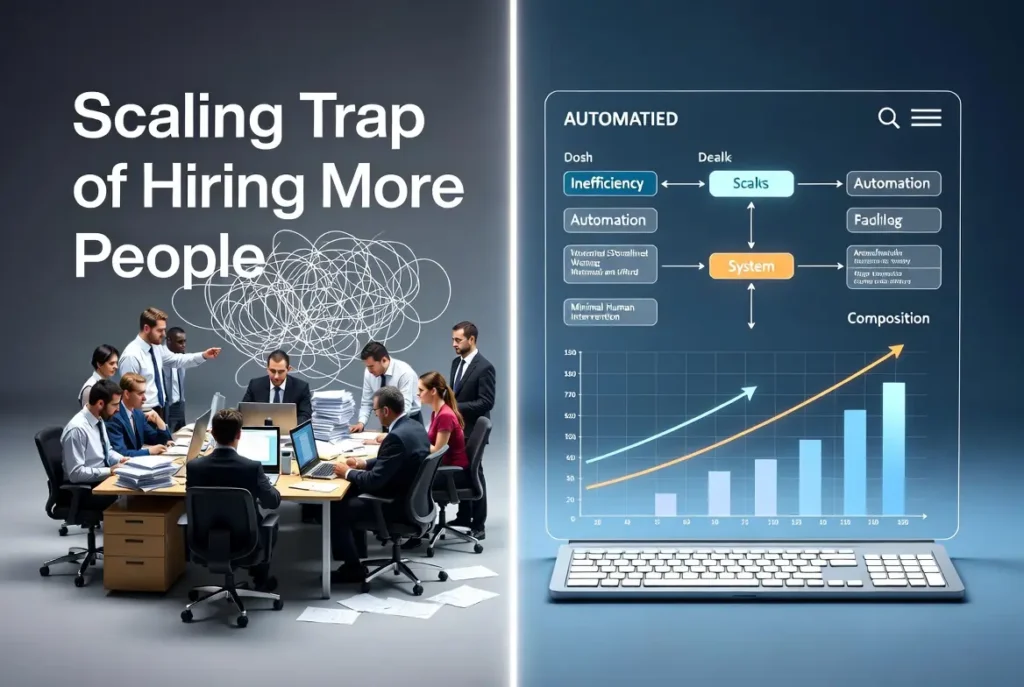
Growth in 2026 is no longer measured by the size of an office or the number of employees on the payroll. The shift toward lean operations has redefined what it means to scale a business successfully. Modern storefronts are finding that increasing headcount often introduces complexity and communication drag that outweighs the benefits of extra hands. Instead, the focus has turned to financial sustainability through high-output systems that allow a small, expert team to manage high-volume transactions. This method prioritizes profit margins and operational agility, ensuring that a business remains stable even during market fluctuations.
The cost of labor in 2026 has reached a point where every new hire must produce significantly more value than their salary and benefits package. For many storefronts, especially those operating in a competitive local market, the goal is to keep the core team small while using technology to handle the heavy lifting. By adopting specialized financial administration, owners can see their revenue double or triple without needing to double their staff. This decoupling of labor from revenue is the hallmark of a healthy, modern enterprise.
Automating the Back Office for Long-Term Viability
The administrative burden of a growing company is often the first thing to break during a growth spurt. In previous years, the answer was to hire more clerks, accountants, and data entry specialists. In 2026, the answer is integration. When systems speak to one another without human intervention, the risk of manual error drops to near zero. A storefront that links its sales data directly with its accounting software ensures that every transaction is tracked and reconciled the moment it occurs.
This level of automation extends to inventory management and supplier relations. When stock levels dip below a certain threshold, the system can automatically generate a purchase order based on historical sales data and current trends. This prevents the need for manual inventory counts and reduces the likelihood of stockouts or overstocking. More companies are turning to Influential Business Leadership Content for growth because it provides the structural support needed to handle these tasks autonomously. Without the need for a procurement team to constantly monitor levels, the business stays light and responsive.
Reducing Friction in Customer Interactions
Customer service has historically been one of the most labor-intensive departments. Scaling a storefront used to mean building out massive call centers or support teams. However, the expectations of 2026 consumers have changed. They prefer fast, accurate answers over long phone conversations. Implementing sophisticated self-service portals and automated response systems allows a business to handle thousands of inquiries simultaneously. This does not mean removing the human element entirely, but rather reserving human talent for high-priority or highly sensitive issues.
When a customer in the surrounding region needs to track an order or update their billing information, they should be able to do so within seconds via a mobile interface. By using modern payment systems, storefronts can offer diverse payment options and immediate refund processing without a billing specialist having to touch the file. This efficiency builds trust and encourages repeat business, which is far more cost-effective than constant customer acquisition. The focus on Business Leadership Resources has driven measurable growth for those who prioritize digital first interactions.
Maintaining Financial Sustainability
Financial sustainability is the ability of a business to maintain its operations and growth without exhausting its resources or relying on constant external funding. In the economic climate of 2026, cash flow management is paramount. Scaling too fast with too much overhead is a common cause of failure. By keeping the headcount low, a business maintains a lower break-even point. This means that during slower months, the business can remain profitable where a more bloated organization would face layoffs or closure.
Using advanced fiscal reporting allows leadership to see exactly where every dollar is going in real-time. Instead of waiting for a monthly or quarterly report, managers can make adjustments daily. If a specific marketing channel is underperforming, the budget can be shifted immediately. If shipping costs in the local area are rising, the system can flag it and suggest alternative carriers. This data-driven approach removes the guesswork from scaling and ensures that every step forward is backed by solid numbers.
The Integration of Artificial Intelligence in Daily Tasks
Artificial intelligence in 2026 is no longer a futuristic concept but a standard tool for operational efficiency. It is used to analyze vast amounts of data that would take a human team weeks to process. For example, AI can predict seasonal demand shifts with high accuracy, allowing a storefront to prepare its logistics well in advance. This predictive capability means the business can scale its operations for peak seasons without hiring seasonal workers who require training and oversight.
In the realm of content and marketing, AI helps generate product descriptions, social media posts, and email campaigns tailored to specific customer segments. This allows a single marketing manager to do the work that once required an entire agency. While the human provides the creative direction and brand voice, the technology handles the repetitive execution. The demand for Storefront Architecture for Sales continues to rise as businesses realize they can maintain a high-quality brand presence with minimal staff. This shift toward "cyborg" workflows—human-led but machine-executed—is essential for staying competitive.
Strategic Outsourcing and the Gig Economy
When a specific skill set is needed that the core team does not possess, the 2026 approach is to look for specialized partners rather than full-time hires. This allows a business to access top-tier talent for specific projects without the long-term commitment of a salary. Whether it is legal advice, high-end design, or specialized auditing, outsourcing provides flexibility. It allows a storefront to scale its expertise up or down depending on the current needs of the business.
This model also applies to physical operations. Third-party logistics (3PL) providers in the nearby area can handle storage, packing, and shipping. By using a 3PL, a storefront avoids the need to lease warehouse space or manage a fulfillment staff. The 3PL scales its services based on the business's volume, meaning the storefront only pays for what it uses. This variable cost structure is much safer for a growing business than the fixed cost of a private warehouse and a permanent crew.
Scaling the Tech Stack Instead of the Payroll
The technology stack is the backbone of the modern storefront. In 2026, the best stacks are modular, meaning new tools can be added or removed as the business evolves. A core platform might handle the website and sales, while specialized plug-ins manage tax compliance and customer loyalty programs. The key is to ensure that these tools are deeply integrated so that data flows between them. If the tech stack is disjointed, it creates "digital duct tape" that eventually requires human intervention to fix.
Investing in high-quality software may seem expensive upfront, but compared to the cost of multiple salaries over several years, it is a bargain. Software does not take sick days, it does not require health insurance, and it performs at the same level at 3:00 AM as it does at 3:00 PM. Businesses that prioritize a solid tech foundation are the ones that can handle sudden surges in demand without their operations crumbling. They are able to remain lean and focused on their core mission while the software manages the background noise.
Data Security and Compliance in a Lean Environment
As a business scales, its risk profile increases. More transactions mean more data, and more data means a higher risk of security breaches. In 2026, data privacy regulations are stricter than ever. A small team cannot manually ensure that every transaction complies with every local and international law. This is where automated compliance tools become necessary. By building security and compliance into the workflow, a business protects itself without needing a massive legal or IT department.
For storefronts operating in any major center, using secure payment gateways is the first line of defense. these systems are designed to handle the complexities of data encryption and fraud detection. They provide a level of security that would be impossible for a small business to build on its own. This allows the business to focus on growth while having peace of mind that its customers' information is safe. Security is not just a technical requirement but a fundamental part of the brand's reputation and long-term sustainability.
The Human Element: Leading a Lean Team
Managing a small, high-performance team in 2026 requires a different leadership style than managing a large department. Every member of the team must be a generalist who can handle multiple aspects of the business, but also a specialist in their core area. Communication must be clear and direct, as there is no room for layers of management to filter information. The owner or manager becomes a conductor, ensuring that all the automated systems and human talents are working in harmony.
%2520(1).jpeg)
Culture becomes even more important in a lean environment. When there are only five or ten people in the room, every personality has a significant impact on the workspace. Hiring for fit and adaptability is just as important as hiring for skill. By providing the team with the best tools, such as efficient management platforms, leadership shows they value their employees' time. This leads to higher retention and a more dedicated workforce, which is the ultimate goal of any sustainable business model. A stable team is a productive team, and in 2026, productivity is the engine of growth.
The transition to a low-headcount, high-output model is not always easy. It requires a willingness to let go of old ways of thinking and a commitment to continuous learning. However, the rewards are clear: higher margins, less stress, and a business that is built to last. By focusing on automation, strategic partnerships, and financial sustainability, modern storefronts can achieve levels of success that were once reserved for massive corporations. The future of business belongs to the lean, the agile, and the technologically savvy.

Table of Contents
- – The 2026 Philosophy of Expansion
- – Automating the Back Office for Long-Term Viabi...
- – Reducing Friction in Customer Interactions
- – Maintaining Financial Sustainability
- – The Integration of Artificial Intelligence in ...
- – Strategic Outsourcing and the Gig Economy
- – Scaling the Tech Stack Instead of the Payroll
- – Data Security and Compliance in a Lean Environ...
- – The Human Element: Leading a Lean Team
Latest Posts
Maximize Your Liquidity With Better Business Tools
Preparing for 2026: The New Rules of Cash Flow
Unlocking New Markets With Expansion Capital
Latest Posts
Maximize Your Liquidity With Better Business Tools
Preparing for 2026: The New Rules of Cash Flow
Unlocking New Markets With Expansion Capital